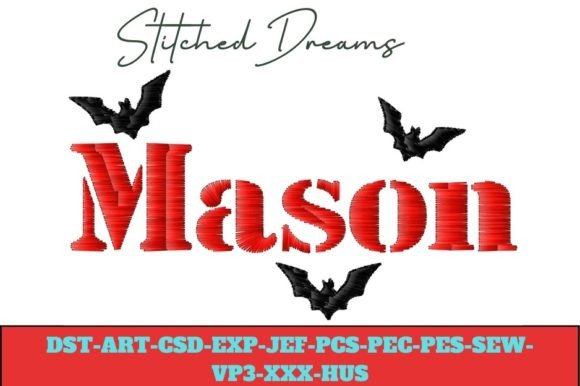
Mason Embroidery Design: A Designer’s Review
As a designer who has spent countless hours staring at digitizing software and troubleshooting thread breaks, I approach every new machine embroidery design with a mix of curiosity and skepticism. We have all seen files that look stunning on a screen but turn into a tangled mess on fabric. When I first loaded the Mason Embroidery Design, my immediate goal was to determine if it held up under the scrutiny of real-world application. This is not just about aesthetics; it is about functionality, stitch quality, and commercial viability for those of us running small shops or creating personalized gifts.
First Impressions and Visual Personality
The first thing that strikes you about this file is its thematic balance. It manages to capture the playful essence of Halloween without leaning too heavily into clichés that might limit its shelf life beyond October. The name “Mason” is integrated with intricate details that suggest a high level of digitizing care. For an embroidery project to succeed, the layout must guide the eye naturally. Here, the typography and decorative elements work in harmony, creating a cohesive unit rather than disjointed parts slapped together.
The mood is inviting yet spirited. It feels appropriate for a wide range of demographics, from children’s apparel to home decor. As a reviewer, I look for versatility. A design that only works on one specific item is less valuable than one that can adapt. This design’s structure suggests it could transition smoothly from a whimsical baby item to a stylish adult accessory, provided the scaling is handled correctly.
Real-World Application: The Tote Bag Test
To truly evaluate the Mason Embroidery Design, I visualized it on a canvas tote bag, a staple for any Etsy seller or craft fair vendor. Canvas is unforgiving; it shows every gap in coverage and every puckering issue. The design’s density appeared sufficient to cover the weave of the fabric without being so heavy that it would cause the bag to warp.
Imagine a customer ordering a custom tote bag design for a fall festival. The contrast between the thread colors and the natural beige of the canvas would make the intricate details pop. The satin stitch elements likely provide a smooth, glossy finish that catches the light, adding a premium feel to the handmade product. If I were producing this for a boutique, I would ensure the stabilizer used was cut-away to support the weight of the stitches during repeated washing and use.
Apparel and Wearables
Moving beyond bags, let’s consider sweatshirt embroidery. This is a high-demand category for Q4 sales. The design needs to sit comfortably on the chest or back without feeling like a stiff patch. The fill stitch areas in the design must be balanced with enough underlay to prevent the fabric from showing through, especially on darker garments.
For custom apparel, such as a child’s hoodie, the softness of the thread against the skin is paramount. If the design includes dense clusters, I would recommend testing it on a scrap piece of the same fleece or cotton blend to check for scratchiness. The Mason Embroidery Design seems to prioritize clarity, which is crucial when stitching on textured fabrics like terry cloth or waffle knit. Clear outlines prevent the design from getting lost in the fabric’s pile.
Technical Considerations for Stitching Success
No matter how beautiful a digital embroidery file looks, technical execution is where projects live or die. Here are the critical factors I evaluated while reviewing this design:
- Stitch Density: Intricate details often mean higher stitch counts. While this adds richness, it can also lead to thread breaks if the tension is not adjusted. Always check the density map if your software allows it.
- Hoop Size Compatibility: Before purchasing, confirm the available hoop sizes. A design that is too large for a 4x4 hoop but perfect for a 5x7 requires planning. Ensure your machine can accommodate the required dimensions.
- Small Details and Corners: Tiny lettering or sharp corners can be problematic. If the design includes fine lines, test them on a similar fabric to ensure they do not bunch up. Sharp corners may need manual editing or careful hooping to maintain crispness.
- Fabric Texture: This design likely performs best on stable fabrics. Stretchy materials like jersey knits require a strong stabilizer and possibly a topping to prevent the stitches from sinking into the fabric.
When working with dark fabrics, consider using a lighter thread color for the base or ensuring the design has enough coverage to hide the background. Conversely, on light fabrics, ensure there are no gaps in the fill stitch areas that might reveal the material underneath.
Commercial Viability and Brand Consistency
For craft business owners, consistency is key. The Mason Embroidery Design offers a professional look that can enhance brand recognition. Whether you are creating embroidered patches for a local team or personalized baby embroidery items for a nursery shop, the quality of the digitizing reflects on your brand.
A well-executed design builds customer trust. If the stitches are clean and the design holds up after washing, customers are more likely to return. This design’s playful yet refined aesthetic fits well within a broader collection of holiday embroidery items, allowing sellers to create cohesive product lines. It serves as a strong design asset for creating printable mockups that attract buyers online.
Practical Designer Notes
- Test on Scrap Fabric: Never run a new design on your final product first. Use a scrap piece of the same fabric and stabilizer combination to check for registration issues.
- Check Thread Contrast: View the design in black and white to ensure the different elements are distinguishable. High contrast helps the design stand out, especially from a distance.
- Verify Licensing: Before selling finished items or using the file for commercial purposes, confirm the license terms. Some designers allow unlimited sales, while others have restrictions.
- Inspect File Formats: Ensure the embroidery file format is compatible with your machine. Common formats include PES, DST, and JEF. If the format is not listed, contact the seller.
- Use Proper Stabilizer: Match the stabilizer to the fabric. Cut-away for stretchy fabrics, tear-away for stable woven fabrics, and wash-away for delicate or sheer materials.
Final Verdict
The Mason Embroidery Design stands out as a thoughtful addition to any designer’s library. It balances thematic charm with technical practicality, making it suitable for a variety of small shop products. From personalized gifts to commercial embroidery runs, it offers the flexibility and quality needed to produce professional results.
Remember, the success of any finished product depends not just on the design file, but on the skill of the operator and the quality of materials used. Take the time to test, adjust, and refine your process. With the right approach, this design can become a bestseller in your Etsy listings or a cherished heirloom in a customer’s home. Always prioritize quality over speed, and let the craftsmanship speak for itself.